Useful Gear
Useful Gear Without the Clutter
Most people spend money on accessories and skip the only ones that matter. Here is the honest priority list: what to own from day one, what to add when you start lifting heavier, and what is purely nice-to-have. Less gear, used well, beats a closet of gimmicks.
What's worth buying, and what isn't
What you need from day one, what you'll add as the loads get serious, and what to avoid completely.
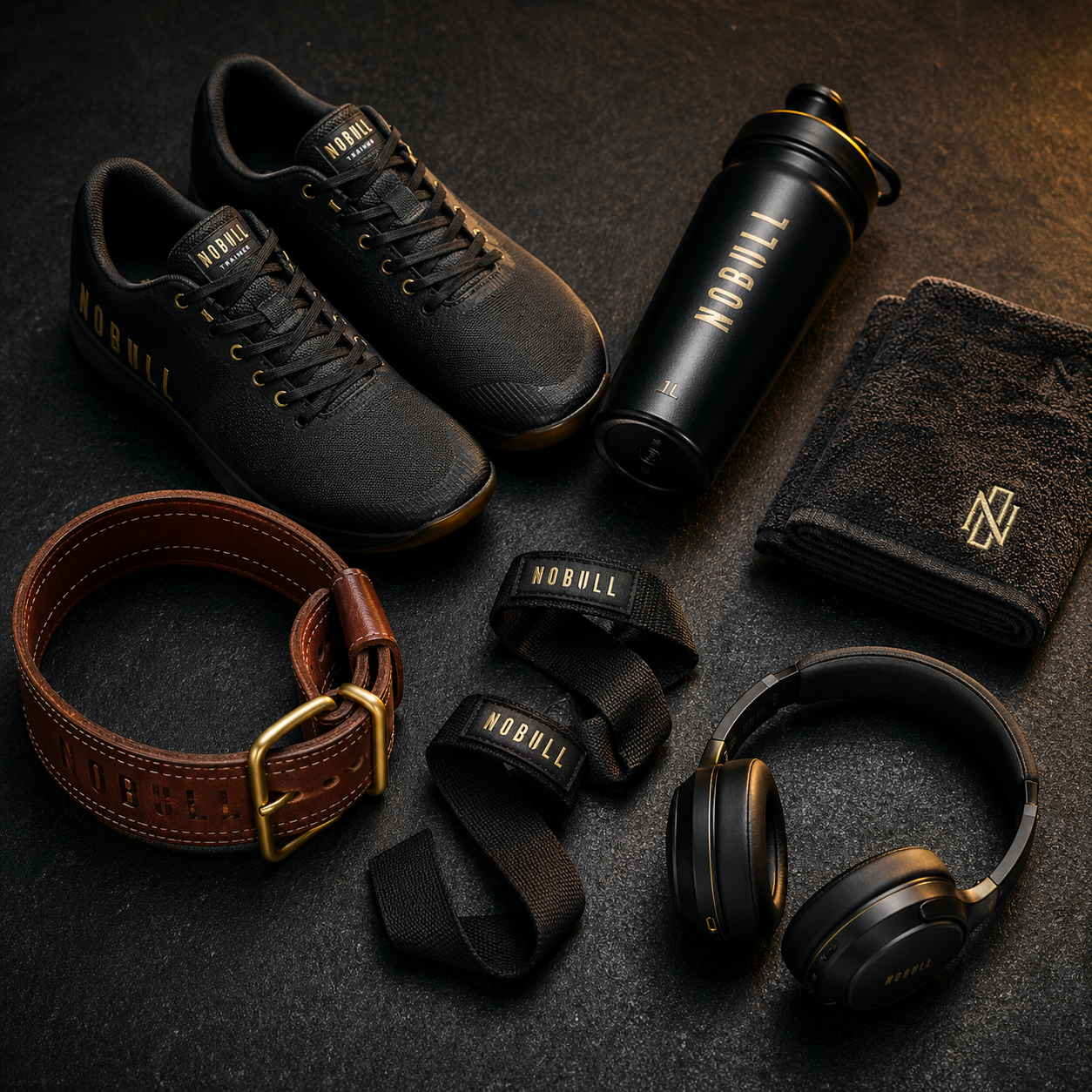
Running shoes are made to compress; lifting needs the opposite. Get flat-soled shoes (Chuck Taylors, Nike Metcons, dedicated lifting shoes) for any squat or deadlift work.
You will sip 500 ml–1 L every session. A bottle next to you removes the friction of getting up — and friction kills consistency.
Etiquette and hygiene. Wipe the bench, wipe yourself. Non-negotiable if you train in shared spaces.
Reps, loads, RPE. The single difference between people who progress and people who guess. Use Notion, Hevy, Strong, or paper — pick one and stick with it.
Adds intra-abdominal pressure. Trains your brace. Use only on top working sets — bracing without a belt is a skill you should keep.
Lets the back get the stimulus the back actually needs without forearms tapping out first. Use only on heavy pulling work.
Keeps the wrist neutral under load. Cheap protection for an annoying joint to injure.
A loop set + a long band cover 80% of common needs. Travel-friendly.
Add warmth and modest stability. Not a fix for poor squat mechanics.
Modest benefit for short-term mobility and tissue feel. Stretching, walking, and sleep do more.
Optional but real. Removes gym noise, helps you concentrate on technique.
Sweat is water, not fat. They do nothing useful and increase injury risk.
Marketing-grade fitness theater for most healthy lifters.
The fix is training the upper back, not strapping it.
A working lifter's bag
Five items in a small bag will out-train a closet of gimmicks. Here is what should be inside.

The A$100 starter kit
Flat-soled shoes, a 1-litre water bottle, a microfiber towel, and a paper notebook. That covers months of training. Add a belt and straps when load and grip become real limiters — usually around month 4–6.
Spend the most on equipment that touches your skin or your spine: shoes, belt, sleeves. Those are the ones that prevent injury and earn back their cost. Everything else is replaceable on a budget.