The Learning Hub
Learn Nutrition Without the Confusion
Nutrition is the lever that makes everything else work. The good news: it is far simpler than the supplement industry needs you to believe. You will not memorize 200 foods. You do not need a dietary religion. You need a hierarchy of priorities — from the things that decide everything (calories, protein) down to the things that polish results (timing, supplements). Master the top of the pyramid and you will outperform anyone obsessing over the bottom.
Six levels of nutrition, in priority order
Spend energy proportional to importance. Most people invert this list — and never get results.
Calories
Decides direction: weight up, weight down, weight stable. Nothing else matters until this is correct.
Protein
Decides whether the weight you change is muscle or fat. The non-negotiable. 1.6–2.2 g/kg/day.
Food Quality
Whole, single-ingredient foods make calories and protein automatic. Most of your plate, most days.
Meal Distribution
3–5 meals, 30–50 g protein each, spaced 3–5 hours apart. Optimizes muscle protein synthesis.
Hydration
30–40 ml/kg/day baseline + extra for sweat. Underrated lever for energy, training, and appetite.
Supplements
The polish on a complete plan. Useful only when 1–5 are already in place.

What protein, carbs, and fat do, and how much you need
Protein, carbs, fat. The total story.
| Macro | Daily Target | kcal/g | What it does | Best foods |
|---|---|---|---|---|
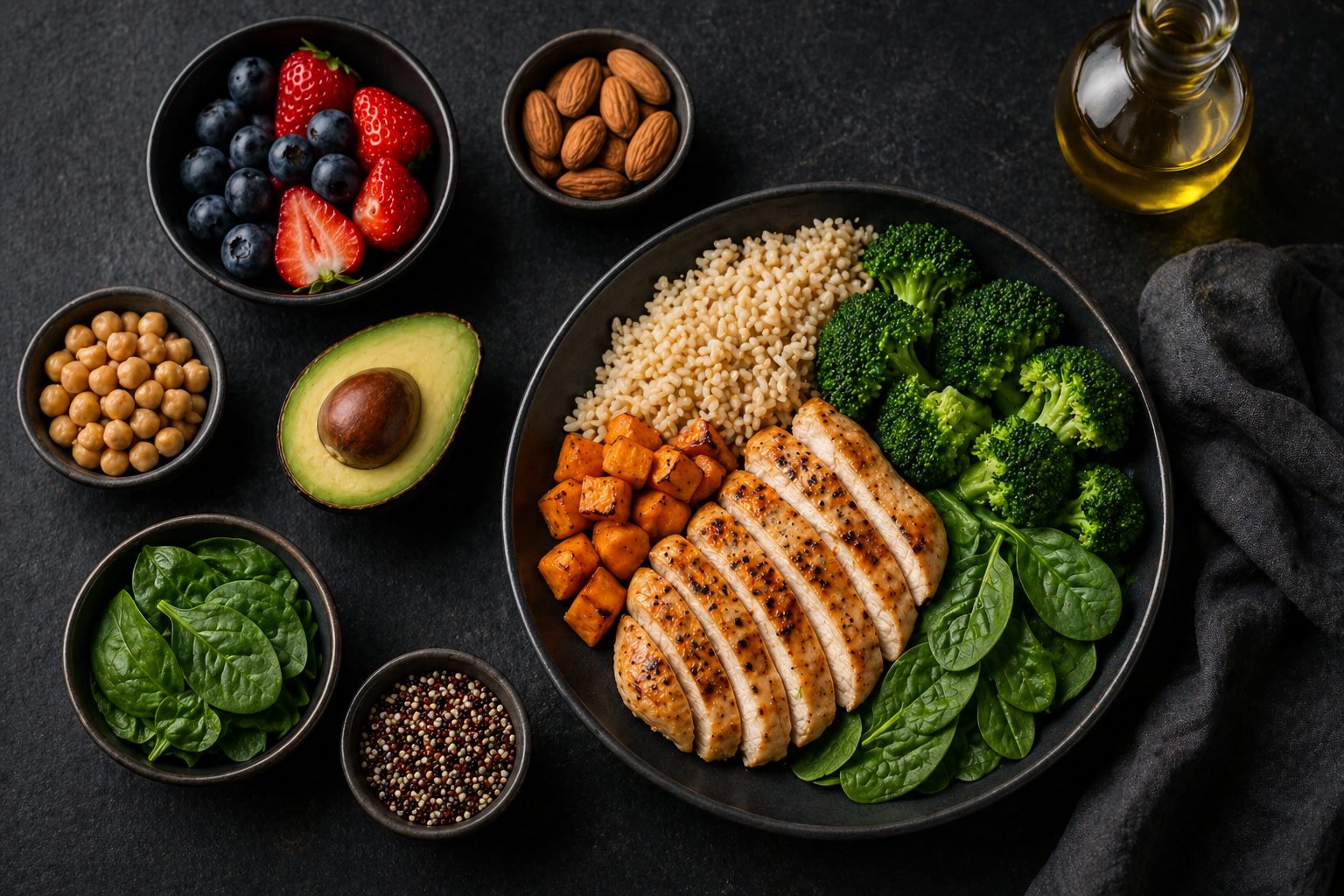
| Protein | 1.6–2.2 g/kg | 4 | Builds and protects muscle, increases fullness, the most metabolically expensive macro to digest. | Chicken, eggs, lean beef, fish, Greek yogurt, cottage cheese, tofu, tempeh, whey, soy isolate, lentils, beans. |
| Carbohydrate | 3–6 g/kg | 4 | Fuels training, brain function, recovery. Replenishes muscle glycogen. The cheapest, fastest energy substrate you have. | Rice, oats, potatoes, sweet potatoes, fruit, whole-grain bread, pasta, beans, quinoa. |
| Fat | 0.8–1.2 g/kg | 9 | Hormone production, vitamin absorption, satiety, joint and brain health. Don't fear it — but don't drown in it. | Olive oil, avocado, nuts, seeds, nut butter, fatty fish, eggs, dark chocolate. |
Multiply your bodyweight in kg by the lower and upper limits to get a daily range. Most lifters do well at ~2 g/kg protein, 4 g/kg carbs, and 1 g/kg fat. Adjust calories up or down for goal.
A simple formula for putting any meal together
Use this for breakfast, lunch, and dinner. It works at home, in restaurants, on holiday — anywhere you have food.
Protein (palm-sized)
20–50 g per meal. Lean cuts as the default; cook with minimal added fat.
Vegetables (two fistfuls)
Color and fiber. Volume that fills the plate without inflating the calories.
Carbs (cupped hand)
Around training, increase. Sedentary days, decrease. Stop guessing — measure twice, eyeball after.
Fats (thumb-sized)
Drizzle, slice, or scoop. Calorie-dense — easy to overdo without realizing.
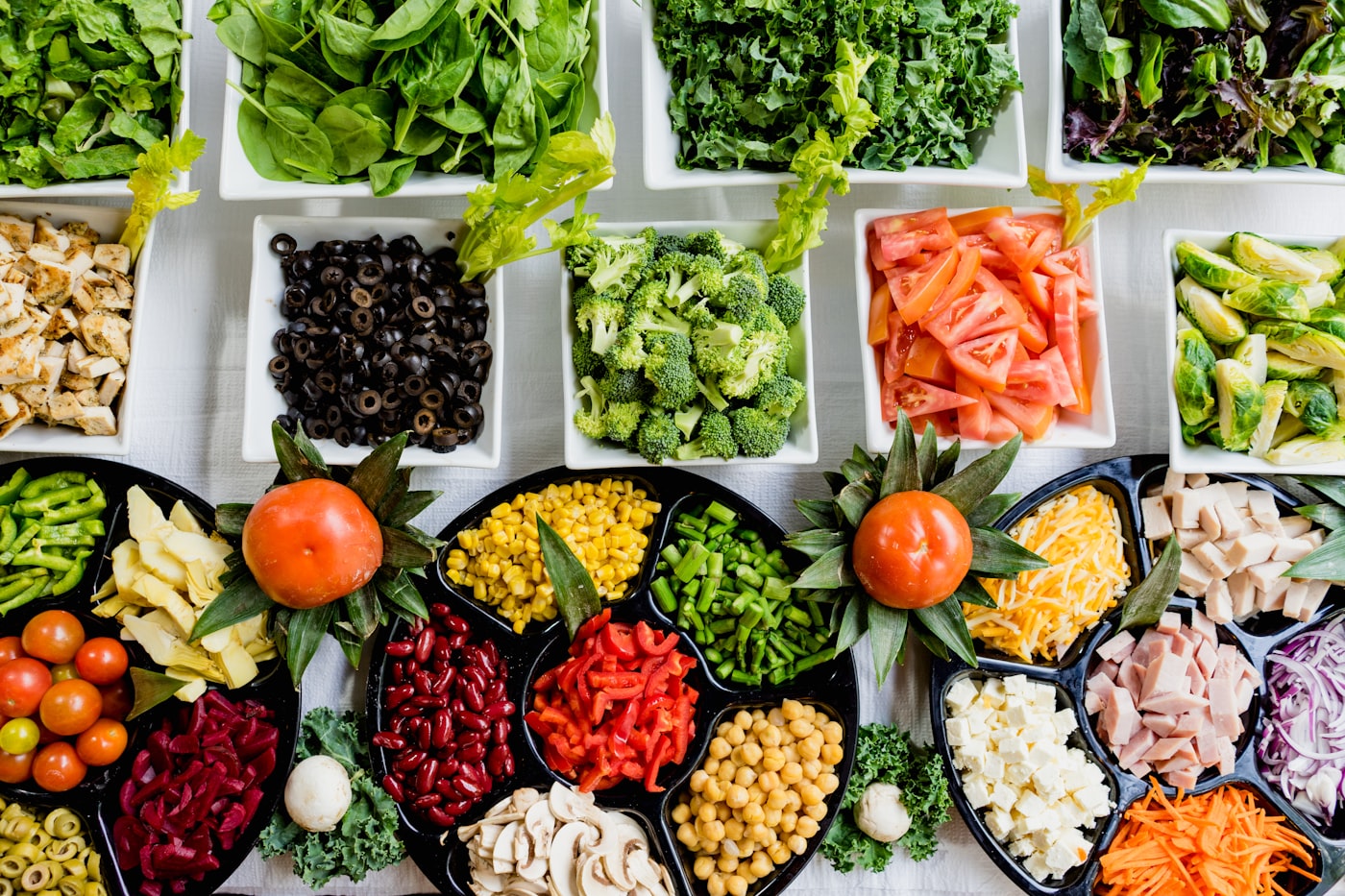
A full day of meals that hits the targets
~2,200 kcal • ~165 g protein • ~250 g carbs • ~60 g fat (suits an active 75 kg adult on a recomp track)

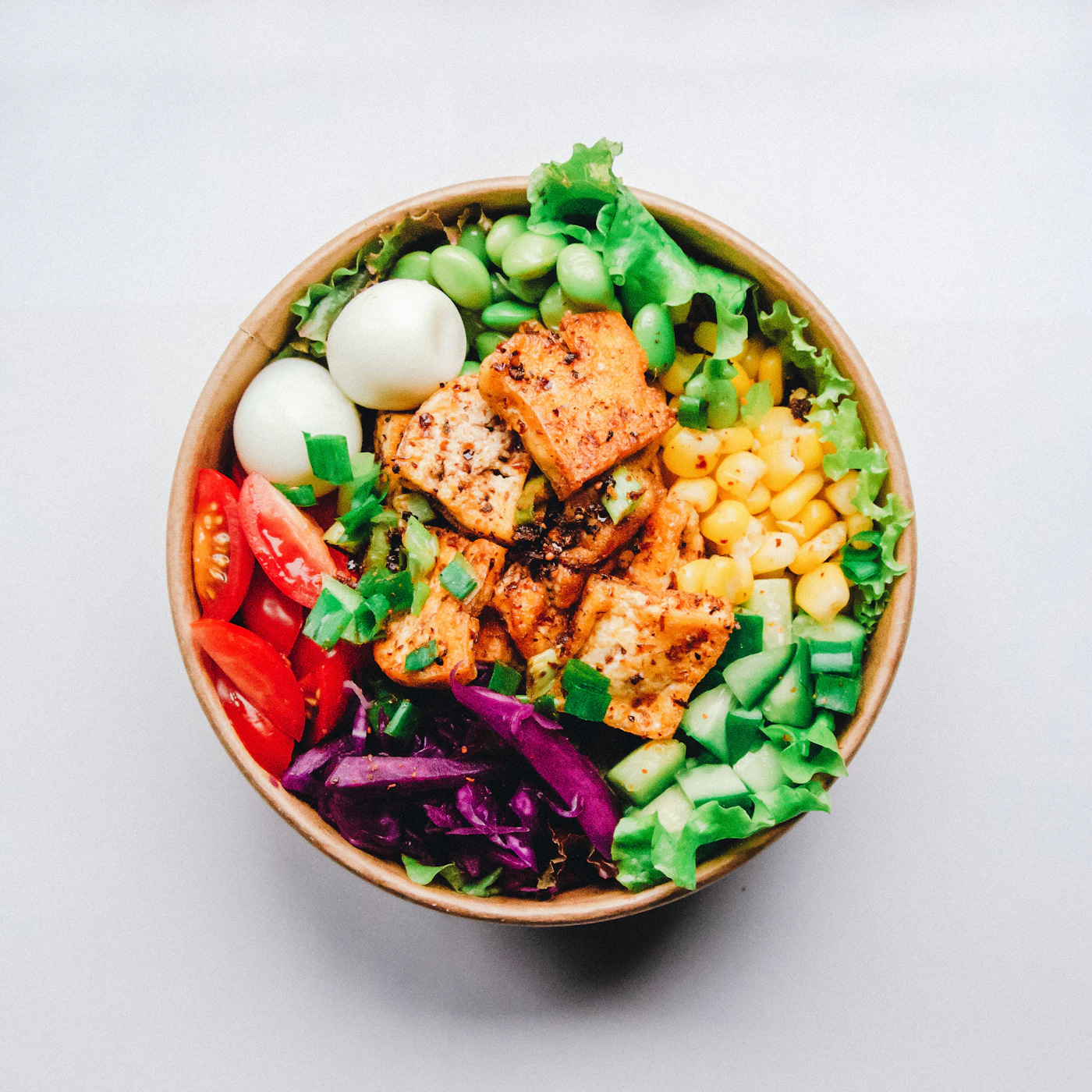
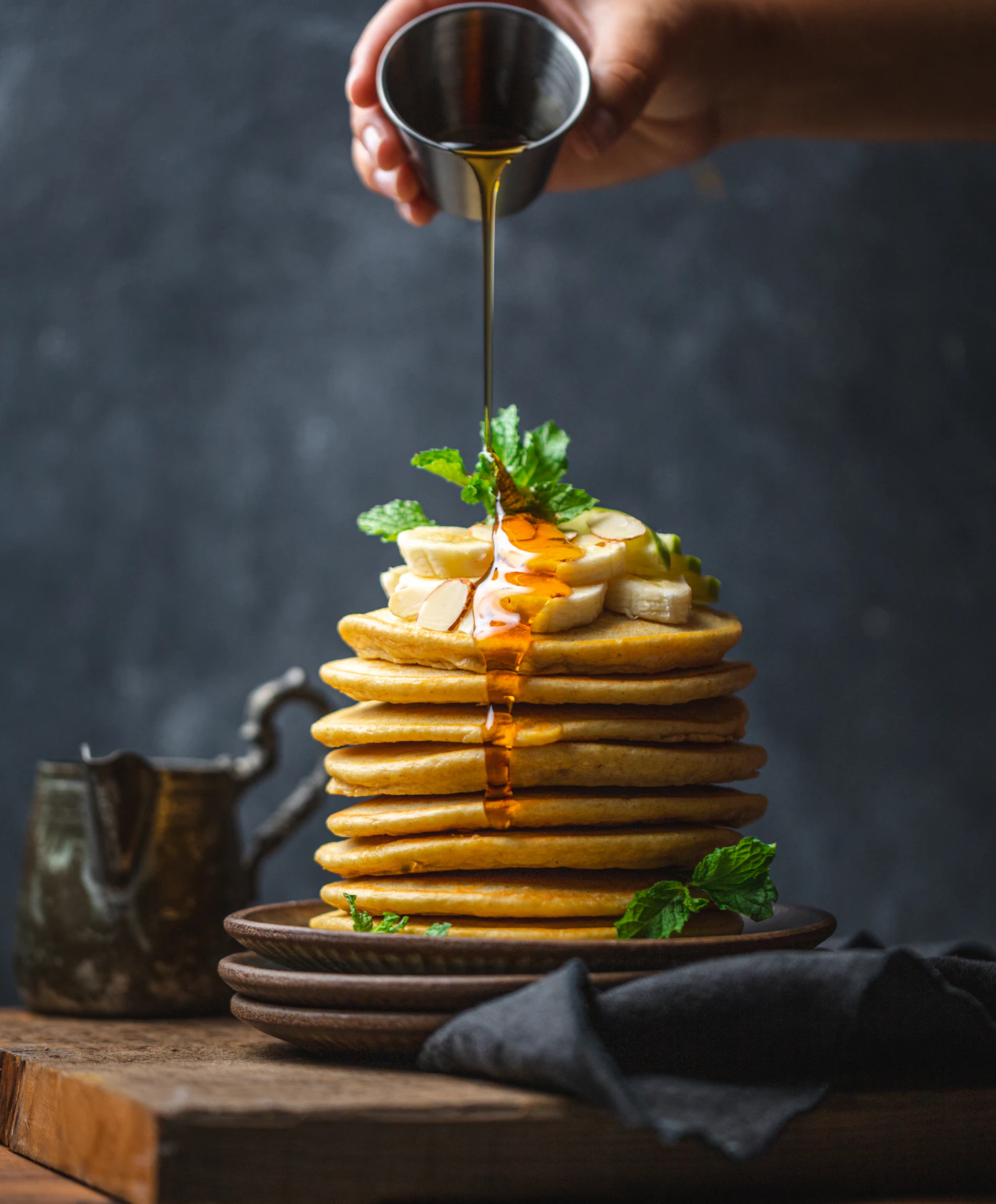
Don't copy meal-for-meal. Use it as a structural template. Keep protein per meal at 30–50 g, balance carbs around training, and add or subtract a snack to match your daily target.
Straight answers to the ones we hear most
These are the questions that come up time and time again. The evidence-based answers don't change.
Do I need to count calories forever?
No. Count for 4–8 weeks to learn what your meals actually contain. Once you can eyeball a plate to within 10–15%, switch to portions and weekly check-ins.
Are calories really all that matter?
Calories decide direction. Protein, food quality, and hydration decide outcome. Energy balance is the gravity of nutrition — but body composition lives in the rest of the system.
What about meal timing and intermittent fasting?
Useful as a tool for some people, mandatory for nobody. If skipping breakfast makes hitting your daily targets easier, do it. If it makes you ravenous at 3 pm, eat earlier. Adherence beats theory.
Should women eat differently than men?
Same hierarchy, different totals. Smaller bodies need fewer calories; the menstrual cycle introduces hunger and water-retention waves you should track on a 28-day basis.