61 in-depth articles on building muscle, losing fat, programming, and the lifters who shaped the sport. Sources are cited on every one.
Supplements · 11 min read · May 2026Creatine: The Complete Evidence-Based Guide
Creatine: The Complete Evidence-Based Guide
Supplements11 min read🗓 Last updated: May 2026★ Pillar Article
Quality signals✓Evidence-based✓Named research sources✓Updated regularly✓Written by a real lifter
VBE EditorialVBE Performance
VBE Performance publishes independent, evidence-based fitness and nutrition content. Every article is built on peer-reviewed research, written in plain English, and reviewed against our editorial standard.
📅 Published: May 2026🔄 Updated: May 2026⏱ 11 min read📂 Supplements
Creatine monohydrate has been studied in clinical and applied research for over 30 years. More than 500 peer-reviewed studies have examined its effects on performance, body composition, health, and safety. The evidence is unusually consistent: creatine supplementation increases maximal strength and power output by 5–15%, improves high-intensity exercise performance, supports muscle hypertrophy, and appears to have cognitive and neuroprotective benefits that researchers are only beginning to fully characterise. It is also one of the cheapest supplements on the market. If you are doing any form of resistance training and are not taking creatine, you are leaving a meaningful and safe performance gain on the table.
How creatine works in the body
Creatine is a naturally occurring compound synthesised primarily in the liver and kidneys from the amino acids arginine, glycine, and methionine. It is also obtained from dietary protein — primarily meat and fish. Approximately 95% of the body's creatine is stored in skeletal muscle, primarily as phosphocreatine (PCr).
The phosphocreatine energy system is the body's fastest mechanism for ATP (energy) resynthesis. During high-intensity efforts lasting 1–10 seconds — a maximal sprint, a heavy compound lift, an explosive jump — the body depletes available ATP within approximately 1–2 seconds. Phosphocreatine donates its phosphate group to resynthesise ATP, extending the duration of near-maximal effort.
Creatine supplementation increases total creatine and phosphocreatine stores in muscle by 10–40%. This increased store extends the capacity of the PCr system, allowing more quality reps at high intensities before fatigue forces load reduction or technique breakdown. More quality reps per session, applied consistently over months, produces measurably more hypertrophy and strength gain.
What creatine improves (and what it doesn't)
Creatine's benefits are concentrated in activities dependent on the phosphocreatine energy system: efforts of 1–30 seconds at near-maximal intensity. This covers every meaningful resistance training scenario — working sets of 1–8 reps, explosive movements, and the fatigue management between heavy sets.
The improvements in practical terms: 1–2 more reps on heavy sets, faster recovery between sets (due to accelerated PCr resynthesis during rest periods), and a modest increase in lean body mass (initial weight gain of 0.5–2 kg is primarily water retained in muscle cells due to osmotic effects of intracellular creatine). Long-term lean mass gain from creatine supplementation is genuine muscle tissue, not simply water retention.
Creatine does not improve aerobic endurance performance. Marathons, 5km runs, and sustained cardio training at moderate intensity are fuelled primarily by the aerobic system and are not PCr-dependent. The initial weight gain from creatine supplementation may slightly disadvantage endurance athletes who compete by bodyweight.
Emerging evidence suggests creatine supplementation supports cognitive performance — particularly in tasks requiring rapid decision-making, short-term memory under sleep deprivation, and attentional demands. The mechanism appears to be creatine's role in cerebral phosphocreatine stores and neural ATP availability. This research is early but consistent.
How to take creatine: protocol and timing
Loading phase (optional): 20–25g/day split into 4–5 doses for 5–7 days. This saturates muscle creatine stores faster — within a week rather than 3–4 weeks. Loading is not required, but if you want to experience the benefits quickly (before a competition or important training block), loading achieves this.
Maintenance dose: 3–5g/day. This is the standard evidence-based dose. 5g/day is sufficient for most individuals under 90 kg; larger individuals (>100 kg) or those with very high training volumes may benefit from 5–10g/day. More is not better beyond saturation — excess creatine is simply excreted.
Timing: The research on timing is less conclusive than marketing would suggest. A small study by Antonio and Ciccone (2013) found post-workout creatine slightly superior for body composition outcomes, but the magnitude was minimal. The most important factor is daily consistency, not timing. Take it whenever you will reliably remember it — with breakfast, mixed into a protein shake, or post-training.
Cycling is not necessary: There is no evidence that cycling creatine (taking breaks) is beneficial or that continuous use down-regulates natural creatine synthesis in a meaningful or permanent way. Take it daily, year-round.
Like this article? Get the next one in your inbox.
One practical, evidence-based piece a week. Plus the Foundation Program PDF as a thank-you. No spam — unsubscribe anytime.
Which form of creatine to buy
Creatine monohydrate is the only form with a substantial evidence base. Every major research finding on creatine — every performance improvement, every safety study, every cognitive benefit — was produced using creatine monohydrate. It is the reference compound.
Creatine hydrochloride (HCl) is marketed as more soluble and better absorbed at smaller doses. The evidence does not support its superiority to monohydrate for performance or body composition outcomes. It is more expensive.
Kre-alkalyn (buffered creatine) claims that buffering prevents creatine degradation to creatinine in the gut. Head-to-head studies show no advantage over monohydrate in performance outcomes.
Creatine ethyl ester has been shown in direct comparison studies to be less effective than monohydrate — it is hydrolysed to creatinine before absorption, meaning a smaller proportion reaches muscle as creatine.
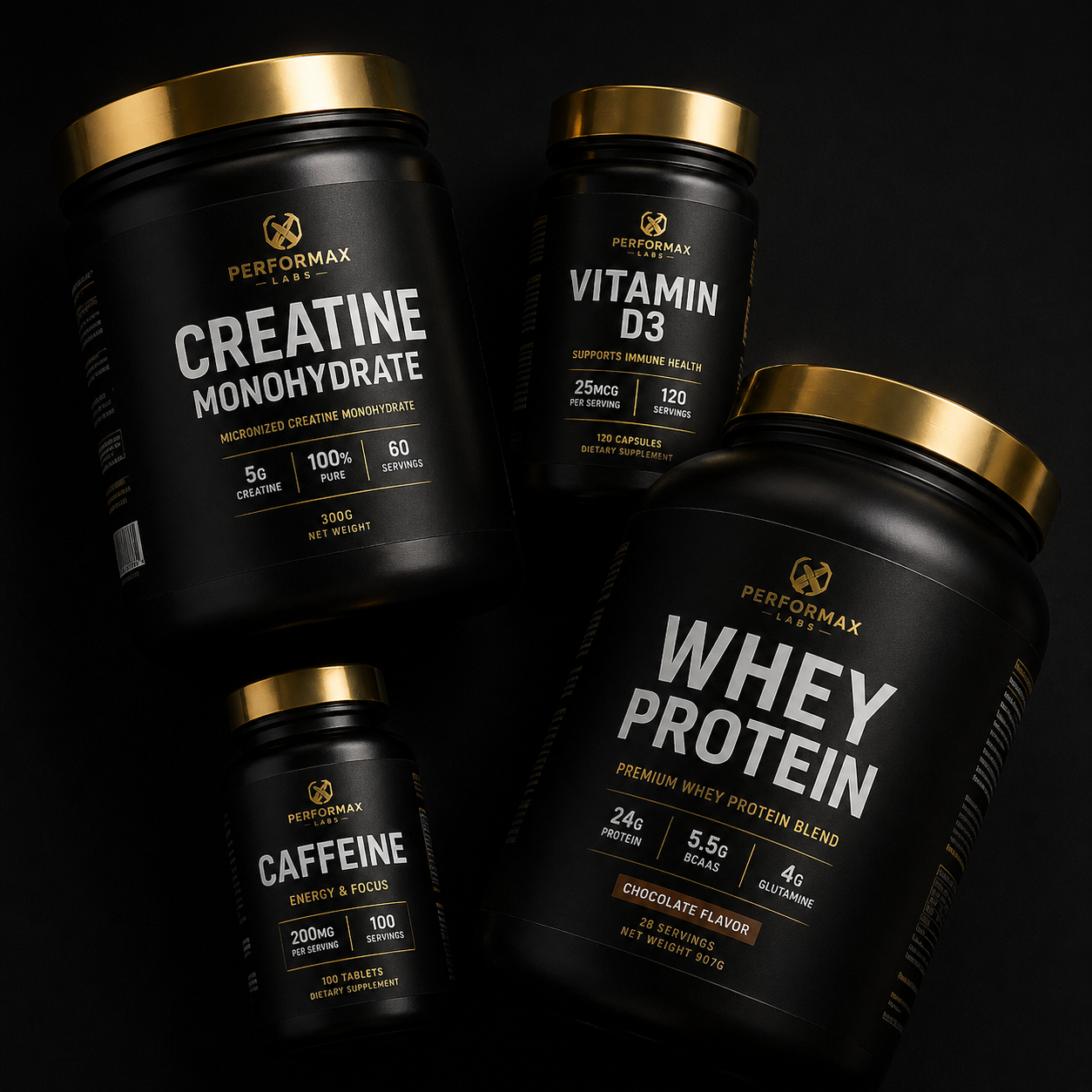
Buy creatine monohydrate — specifically a product with a Creapure® certification (the leading German monohydrate standard) or a tested, certified brand. The price difference between quality monohydrate and premium alternatives can be 3–5× for no measurable benefit. 5g of monohydrate from MyProtein or Bulk costs approximately A$0.30–A$0.40 per day.
Safety, side effects, and who should take it
Creatine monohydrate has been comprehensively studied for safety. Decades of research have found no evidence of kidney damage, liver damage, or other adverse effects in healthy individuals at recommended doses. The kidney concern persists in popular culture but has been addressed in multiple controlled studies — creatine supplementation does not elevate markers of renal stress in healthy people. Individuals with pre-existing kidney disease should consult a doctor before supplementing.
The primary side effect is gastrointestinal discomfort during loading phases when large single doses are taken. This is resolved by splitting doses and ensuring adequate hydration. Taking creatine with food reduces discomfort.
Creatine is appropriate for: anyone performing resistance training, athletes in any power or strength sport, older adults (creatine has demonstrated benefits for muscle preservation and cognitive function in older populations), and individuals seeking the cognitive performance benefits. It is one of the few supplements with a clear benefit-to-cost ratio across multiple populations.
Key takeaways
Creatine monohydrate is the most researched and most consistently effective legal supplement. 500+ studies, 30+ years of data.
It works by increasing phosphocreatine stores — extending ATP resynthesis during high-intensity sets. More quality reps = more adaptation over time.
Take 3–5g/day. Timing doesn't matter much; daily consistency does.
Buy monohydrate — it is the only form with meaningful evidence. Everything else is marketing.
It is safe for healthy individuals. The kidney concern has been repeatedly disproved in controlled research.
Apply This →
📚Sources & Further ReadingVBE uses peer-reviewed research as its primary evidence base.
Layne Norton, PhD — Nutritional Sciences
Protein metabolism, energy balance, and dietary flexibility.
International Society of Sports Nutrition (JISSN)
The most authoritative applied-research body in sports nutrition.
Cochrane Systematic Reviews
The gold standard for clinical claims.
Content is reviewed and updated as new research emerges.
Combine it with the right path on the Training page and a daily target from the Tools page. The magic is the combination.
Related Articles
Keep reading
Read these next.
Supplements · 9 min read
Supplements That Actually Work (And the Ones That Don't)
Training and recovery supplements ranked by the evidence: what's essential, what's optional, and what to stop wasting money on.
Read article →
Supplements · 7 min read
Caffeine for Lifting: Dose, Timing, and the Mistakes Most People Make
Caffeine is the most researched and most effective legal performance supplement in existence — and the most commonly misused. Practical guidance on dose by bodyweight, timing windows, tolerance management, and the pre-workouts not worth the money.
Read article →
Fat Loss · 9 min read
How to Lose Fat Without Losing Muscle
A complete guide to protecting muscle mass during fat loss using protein, lifting, calorie targets, and recovery strategy.
Read article →
Wait — before you go
Take the Foundation Program with you.
The complete 8–12 week beginner protocol — structured workouts, progression rules, and warm-ups — as a printable PDF, delivered instantly. No spam. Unsubscribe in one click.
By submitting you agree to receive marketing emails. See our Privacy Policy.
Free — No catch
Get the Foundation Program PDF
The complete 8–12 week Foundation Program — structured workouts, progression rules, and evidence-based notes — delivered to your inbox instantly. Plus weekly training and nutrition insights from VBE Performance. No spam. Unsubscribe anytime.
✓ Free PDF program✓ Weekly insights✓ No hype. Ever.
Educational content only. Always consult a qualified professional before making major health or training changes.
We use cookies.
Strictly necessary cookies are always active. We also use analytics cookies and affiliate tracking cookies (Amazon and Major Fitness) to understand site traffic and support free content. You can accept all cookies or decline non-essential ones. See our
for details.